
Last updated
How fast can you set up sanitation after a disaster?
Speed depends on road access and how many units the site needs. A single standard porta potty rental can go out same-day in most cases, while a multi-unit deployment for a shelter or National Guard staging area takes more coordination. Our trucks need about 60 feet of straight clearance to place a roll-off dumpster rental or deliver larger equipment, so tell us up front if debris or downed limbs are blocking driveways. Omaha crews clearing storm damage often need both waste hauling and toilets running at the same time, which is why we quote them together on one request a quote call.
For emergency response, we lean on the same guidance FEMA-adjacent contractors use: ANSI/PSAI Z4.3 sets a baseline service interval of once a week for up to 10 users over a 40 hour week, but disaster sites with hundreds of displaced residents need daily or twice-daily pumping instead. If your site is inside city limits, our emergency porta potty rental page walks through what we need from you to move fast: a gate code, a contact on-site, and a flat, stable spot per ADA Standards 302.1 if you need an accessible unit. We also stock ADA accessible porta potty units for shelters serving elderly or mobility-impaired residents, and under ADA Standards 213.2, at least 5 percent of a cluster of single-user units, and never fewer than one, has to be accessible.
What sanitation equipment does a disaster response site actually need?
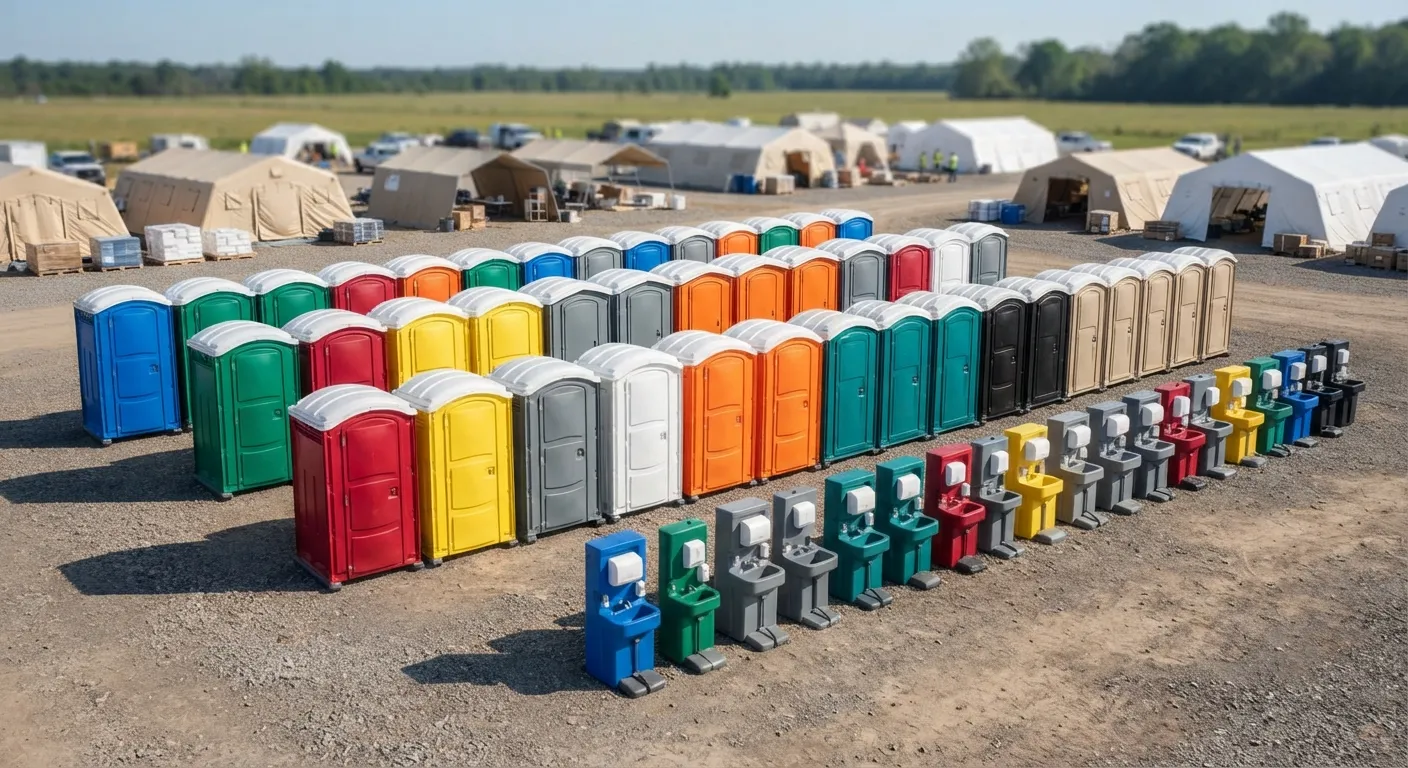
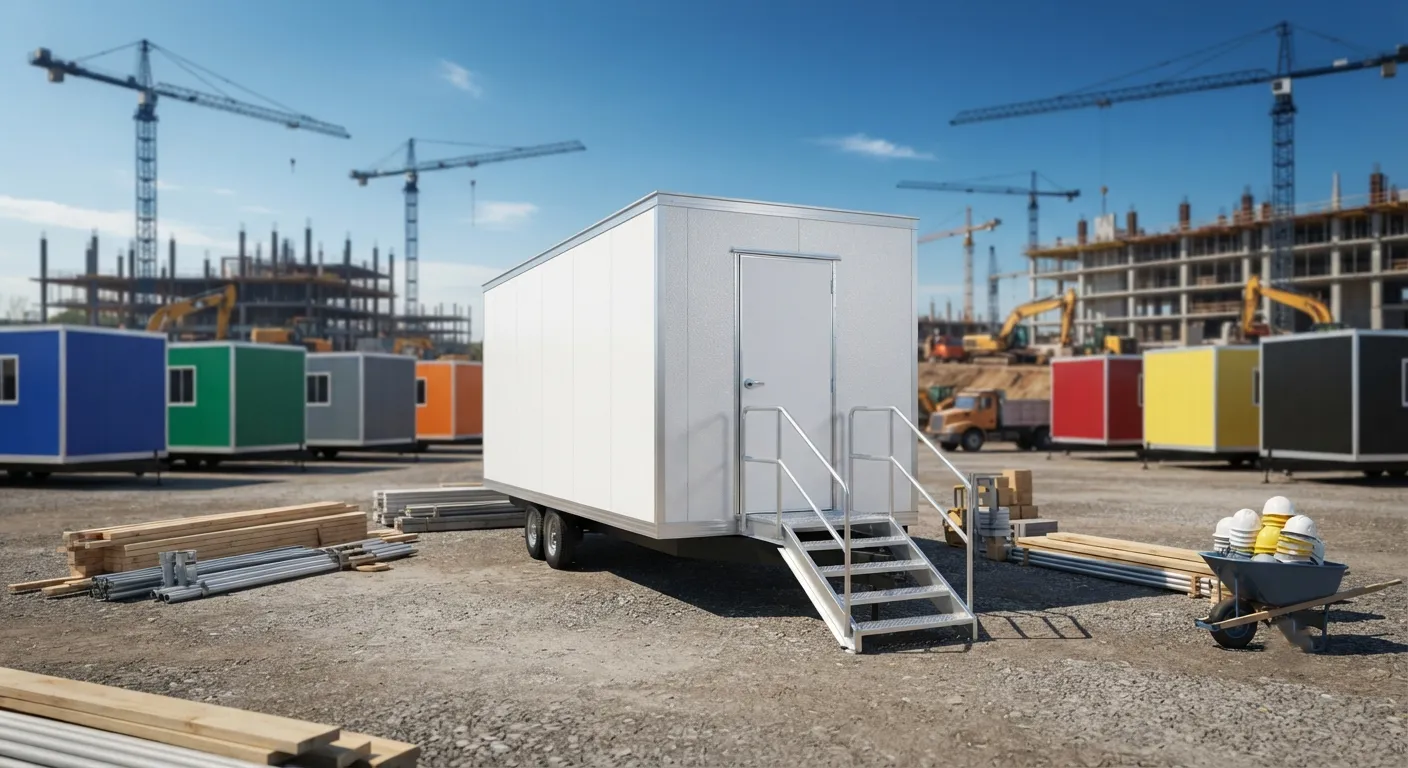
Most sites need toilets, handwashing, and a way to manage debris, all standing at once rather than staged over weeks. Shelters and command posts benefit from a restroom trailer rental with real plumbing, especially a 2 stall restroom trailer or 4 stall restroom trailer depending on headcount. Field crews clearing debris around Omaha need simpler portable toilet rental setups they can walk to without losing work time.
Handwashing is not optional once cleanup crews start moving debris that may carry contaminants. Under 29 CFR 1910.141(d)(2), washing facilities need soap and towels or a hand-drying device; hand sanitizer alone does not satisfy it. That is why we pair every emergency toilet order with a handwashing station rental or a portable sink rental rather than leaving crews with sanitizer bottles. If crews are working with treated debris, coatings, or pesticide residue from flooded storage, OSHA 1926.51(f)(1) requires washing facilities specifically for that contaminant exposure, separate from general sanitation. For general toilet counts on a labor-heavy site, OSHA 1926.51(c)(1) sets the ratio at one toilet facility per 20 workers, scaling to one toilet and one urinal per 40 workers as crews grow past that. Debris removal itself often needs a 10 yard dumpster rental or 20 yard dumpster rental parked next to the sanitation units so crews are not hauling storm debris across a lot.
| unit | duration | typical price |
|---|---|---|
| standard | day | $150 |
| standard | week | $200 |
| ada | day | $230 |
| dumpster | day | $75 |
| service_fee | day | $175 |
Why does site placement matter more in a disaster response?
Placement decides whether the units actually get used and serviced on schedule. Storm debris, downed power lines, and washed-out access roads change the math fast, so our porta potty placement guide is worth a look before delivery day even if the site looks fine now. A service truck still needs a clear, stable path per ADA Standards 302.1 to reach any accessible unit, and a 60 inch turning circle per ADA Standards 304.3.1 if the site is serving displaced residents with mobility equipment. Omaha's terrain and seasonal flooding along low-lying corridors mean we often re-route delivery trucks around closed streets, which can add time even for sites only a few miles from our yard.
We also handle regional deployments. Council Bluffs sits 14.4 miles east and Bellevue 14.7 miles southeast, both distances we cover routinely when a disaster response spans the metro rather than staying inside Omaha proper. If your staging site is temporary and unfenced, pairing units with a temporary fence rental keeps foot traffic controlled around a shelter perimeter. For sites without grid power, ask about a light tower rental or temporary power pole alongside sanitation, since disaster response after dark needs both light and working restrooms, not just one or the other.
How many portable toilets do we need for a shelter?
It depends on headcount and hours of operation, not just square footage. OSHA 1926.51(c)(1) offers a baseline ratio for labor crews, but shelters housing residents around the clock need more frequent servicing than a construction site. Use our how many porta potties do I need guide or call for a headcount-based quote.
Can you deliver on short notice after a storm?
Usually yes, same-day in most cases if roads are passable. Call ahead with your address and any access issues, downed trees or flooded driveways included. We prioritize disaster response requests over standard bookings when the city has an active weather event.
Do you provide handwashing stations separate from toilets?
Yes. A handwashing station rental or portable sink rental can go out alongside toilets or on its own. Under 29 CFR 1910.141(d)(2), stations need soap and towels, not just sanitizer, which matters for crews handling debris or contaminated water.
What if our site has no clean water or power?
We can still deliver. Portable toilets do not require hookups, and OSHA 1926.51(a)(1) requires an adequate supply of potable water at the worksite, which our handwashing units carry with them.
How is disaster response billed differently from standard rental?
Emergency and short-notice orders often carry a service fee on top of the daily unit rate, reflecting rush delivery. Ask us directly what applies to your situation before confirming, since terms shift with storm severity and access difficulty.
Next step
Get a delivery date
Tell us the address, the dates and the headcount. We size the order and confirm the route.