
Last updated
How many restrooms does a farm crew need?
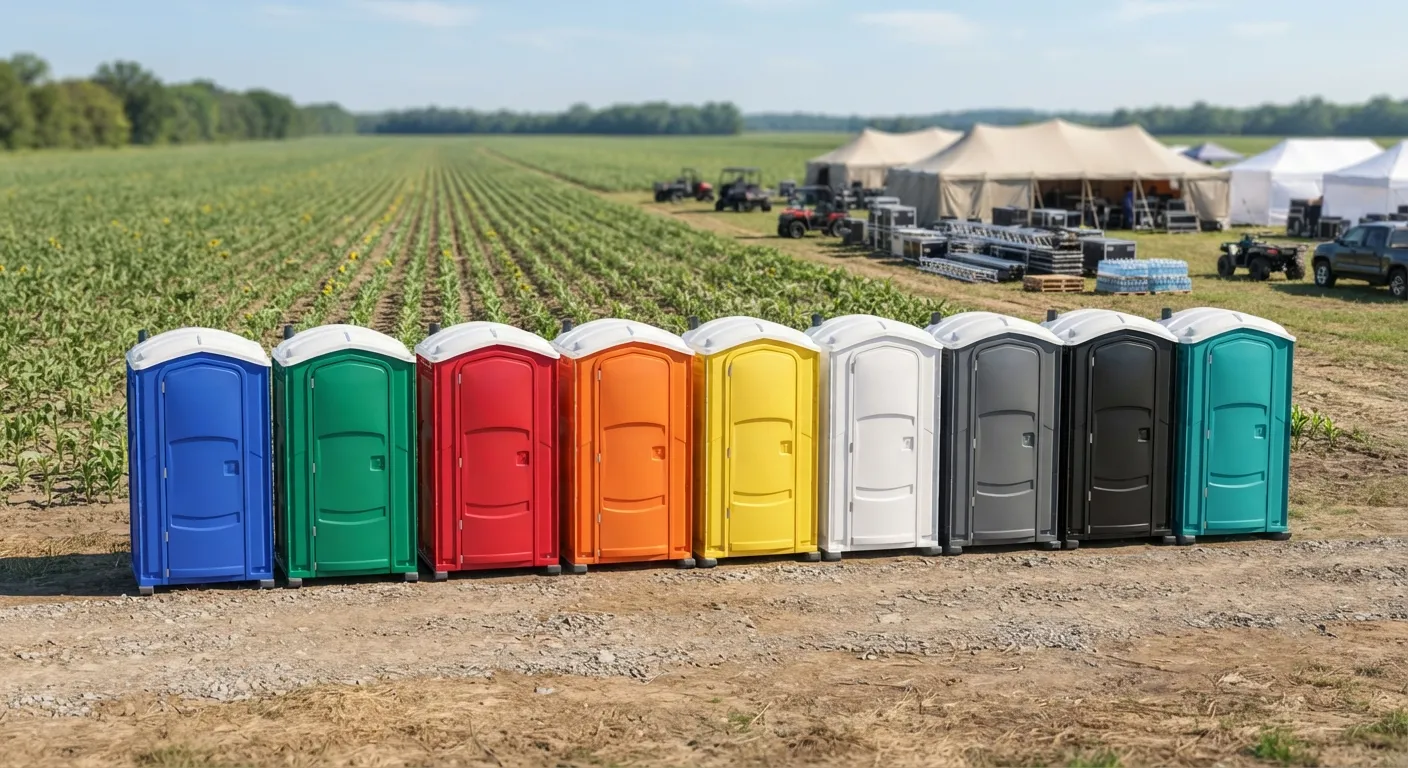
Start with headcount and walking distance, not acreage. OSHA 1928.110 requires potable water, toilets and handwashing within a quarter mile walk for hand-labor employees, at a ratio of one facility per 20 workers. A 15-person detasseling crew needs one unit staged where they can reach it fast, not back at the farmhouse. Larger operations running 40 or 60 field workers across split shifts often need two or three units spread over the property instead of one bank near the gate. Omaha Porta Pros can help you work through the math on our how many porta potties do I need guide, and if your operation also runs a construction crew building a new barn or grain bin, the ratios shift toward OSHA portable toilet requirements under 1926.51(c) instead. Most ag customers around Omaha rent a standard porta potty rental for field use since it holds up well between service visits. Placement matters as much as count: our porta potty placement guide covers ground stability and access for the pump truck. For remote fields far from the shop, some Omaha operations bundle a handwashing station rental alongside the toilets to keep 1928.110's water and washing requirement covered without a separate trip.
What does a farm restroom rental cost?
Pricing runs by duration, and a seasonal harvest schedule usually lands in the weekly or monthly bands rather than daily.
| duration | low | typical | high |
|---|---|---|---|
| day | $100 | $150 | $350 |
| week | $130 | $200 | $500 |
| month | $125 | $200 | $325 |
A short detasseling job might run day rate for a week or two, while a full planting-to-harvest stretch makes more sense on the monthly porta potty rental plan. Grain elevators and packing operations running year-round often lock in a standing monthly unit instead of reordering every season. Delivery adds a separate fee, and our porta potty rental cost page breaks that out fully. If you are comparing day-by-day pricing against a season-long contract, the porta potty rental per day page runs the same numbers from the daily side. Farms near Gretna, roughly 14.7 miles southwest of Omaha, and Chalco, about 10.2 miles southwest, both fall well inside our normal delivery radius, so distance rarely changes the quote much.
Do farms need handwashing stations too?
Yes, if crews handle produce, work with animals or apply chemicals. 29 CFR 1910.141(d)(2) requires washing facilities stocked with soap and towels or a hand-drying device; hand sanitizer alone does not satisfy it. For any Omaha operation that sprays herbicides or insecticides on crops, OSHA 1926.51(f)(1) requires washing facilities specifically because of that pesticide contact, separate from the general sanitation requirement. A packing shed handling produce for market benefits from a dedicated portable sink rental at the wash line, while field crews further out sometimes only need a hand sanitizer station rental as a supplement between full handwash setups, never as the sole facility where 1910.141(d)(2) applies. Farms running septic systems on the property for the farmhouse or bunkhouse should also keep an eye on tank service: a typical 1,000-gallon residential-scale tank gets pumped every 3 to 5 years depending on household size, per our septic pumping service team. If a tank starts backing up mid-harvest, emergency septic service beats waiting out the season. Larger farm operations with a full kitchen or dairy operation sometimes run a grease interceptor too, which needs pumping once fats, oils and grease reach 25 percent of the liquid depth, covered on our grease trap pumping page.
Beyond restrooms, harvest season generates real cleanup: broken pallets, packaging, spoiled produce. A roll-off dumpster rental parked near the packing line handles that without a dozen truck trips to the landfill. Farms doing renovation work on outbuildings between seasons often add a construction dumpster rental at the same time. For equipment and seasonal storage, a storage container rental or a 20ft storage container keeps tools secured out in the field instead of hauled back to the shop every night. Omaha farms bordering public roads sometimes need temporary fence rental around a work zone too, particularly during equipment moves.
How far in advance should I book for harvest season?
Book as early as you can once your harvest window is set, since portable restroom demand across Omaha spikes hard in fall alongside construction and event bookings. Two to three weeks ahead gives us room to route delivery efficiently. Rush orders are possible; check emergency porta potty rental for short-notice needs.
Can one unit serve multiple field locations?
Not really, no. A unit stays put once delivered, since OSHA 1928.110 measures access by a quarter-mile walk from the work area. If your crew splits between two fields a mile apart, you need a unit at each site, not one shared between them.
What size unit works best for field use?
A standard unit works for most farm crews: about 44 by 48 inches on the ground, 92 inches tall, with a 60 to 70 gallon holding tank. See standard porta potty rental for full specs before you order.
Do farmworkers need an ADA-accessible unit?
Only if the crew includes someone who needs one, or if the site is open to the public, like a farm event or fair. ADA Standards 213.2 requires at least 5 percent of clustered units to be accessible. Our ADA accessible porta potty page has full specs.
Does winter weather change farm restroom service?
Yes. Tanks need extra attention below freezing, and service intervals sometimes shift. Read porta potty in winter before locking in a late-fall or early-spring rental around Omaha.
Next step
Get a delivery date
Tell us the address, the dates and the headcount. We size the order and confirm the route.