
Last updated
How Do Porta Potties Work?
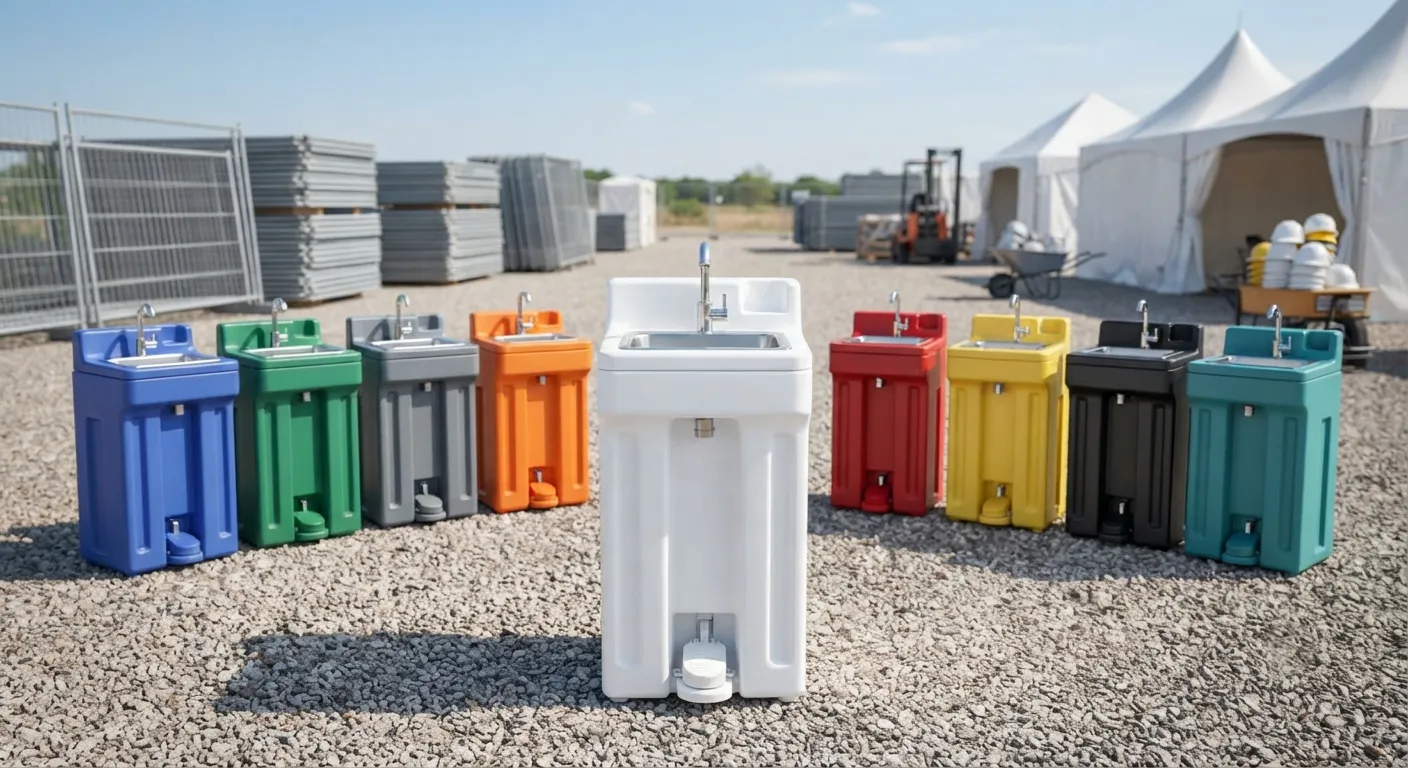
The basic unit is simple: a molded plastic shell around a holding tank, a seat, a vent stack, and a door that locks from inside. There is no flush, no water line. Waste drops straight into the tank below, where the chemical solution keeps it broken down and smelling less. A standard unit measures about 44 by 48 inches on the ground and stands roughly 92 inches tall, which is why one fits in tight side yards on construction site services jobs across Omaha. Vents pull odor up and out through a roof stack instead of back into the stall. On a job site, a construction worker running to a porta-potty during a short break needs the door to open fast and the unit to be close to the work zone, which is part of why placement matters as much as the unit itself. For groups larger than a handful of workers, spacing several standard porta potty rental units around a site beats parking one unit far from everyone. OSHA 1926.51(c) sets the ratio at one toilet seat for 20 workers or fewer on a construction site, moving to one seat and one urinal per 40 workers as headcount rises. That is the number planners use when they figure out how many porta potties do i need for a given crew size in Omaha.
How Do Flushable Porta Potties Work?
A flushable unit adds a small fresh-water tank and a hand-pump or foot-pump flush that rinses the bowl into the holding tank below, instead of leaving waste sitting exposed. That is the difference between a standard porta potty rental and a deluxe flushable porta potty: the deluxe version carries its own freshwater supply and often a small sink, so guests get a rinse-and-flush routine closer to a home bathroom. These units show up most at weddings and private events because they hold up better over a full day of steady use. An ADA accessible porta potty built to this same flushable standard needs a 60 inch turning circle inside per ADA Standards 304.3.1, plus a door opening at least 32 inches wide under ADA Standards 404.2.3, so a wheelchair user can get in, turn, and get back out without help. ADA Standards 213.2 also requires that at least 5 percent of clustered single-user units be accessible, never fewer than one, which matters for anyone planning a festival or fairground layout in Omaha.
How Does a Portable Sink Work?
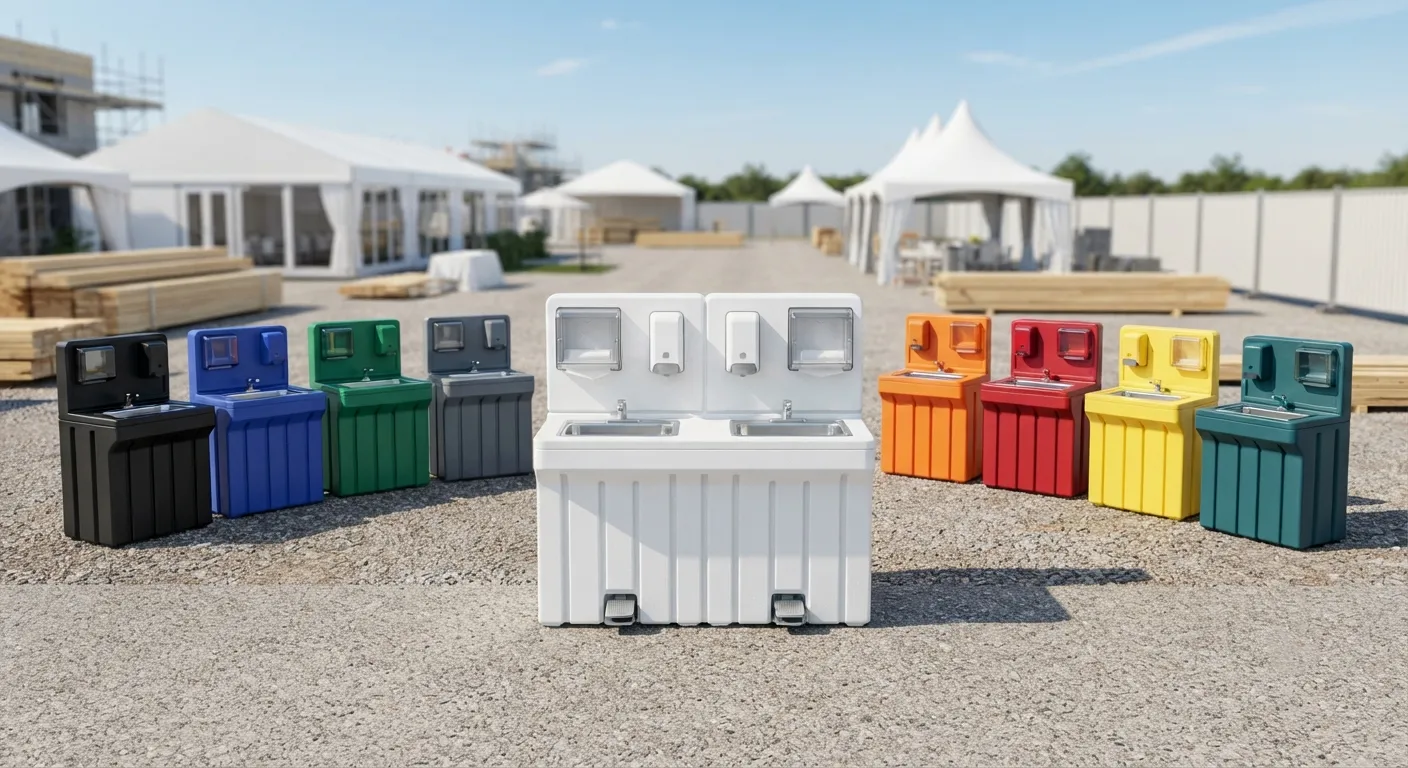
A portable sink runs on the same no-plumbing logic: a fresh-water tank feeds the faucet, usually by foot pump or gravity, and a separate gray-water tank underneath catches the runoff instead of it draining onto the ground. That is what makes a portable sink rental or a full handwashing station rental different from a hand sanitizer dispenser. Under 29 CFR 1910.141(d)(2), washing facilities need soap and towels or a hand-drying device; hand sanitizer alone does not satisfy that. OSHA 1926.51(f)(1) requires actual washing facilities specifically where crews are applying paints, coatings, herbicides or insecticides, since those jobs leave contaminants that sanitizer will not fully remove. On farms, OSHA 1928.110 requires potable water, toilets, and handwashing for hand-labor crews, at a ratio of one facility per 20 workers, within a quarter mile walk, which is the standard reference for farm and agricultural restrooms in the fields around Omaha. If a hand-sanitizer-only setup is being considered instead, it is worth understanding the gap before relying on it; see hand sanitizer station rental for where it fits and where it does not.
Do Camping Porta Potties Work the Same Way?
Not quite. A camping porta potty is often a smaller, self-contained cassette toilet, sometimes with its own tiny flush tank, built to be light enough to move between a campsite and a vehicle. It skips the tall vent stack and molded shell of a standard site unit, trading tank size for portability. For a weekend at a campground outside Omaha, that tradeoff makes sense; for a multi-week job site, it does not, which is why crews lean on standard units instead. Service intervals matter too: ANSI/PSAI Z4.3 sets a baseline of one service visit per week for up to 10 users across a 40 hour week, and Omaha Porta Pros builds routes around that baseline, adjusting up for heavier-use events like those covered under event restroom rental or festival restroom rental bookings.
| Unit type | Day | Week | Month |
|---|---|---|---|
| Standard | $100-$350 | $130-$500 | $125-$325 |
| ADA accessible | $200-$400 | $240-$400 | - |
| Deluxe flushable | $85-$1200 | $150-$290 | - |
Renting for a single afternoon in Ralston, 5.0 miles south of Omaha, works differently than a month-long job in La Vista, 6.4 miles south. Check porta potty rental cost or porta potty rental per day for how duration changes the math, and monthly porta potty rental for longer jobs.
Does a porta potty need water hookup?
No. A standard unit runs entirely off its own holding tank and a chemical deodorizer, no water line needed. Flushable and deluxe units carry a small internal fresh-water tank instead of connecting to plumbing, which is why they can sit anywhere on a site in Omaha.
What chemical goes in a porta potty?
Service crews use a blue deodorizing solution designed to break down waste and hold odor down between visits. It is not something a renter needs to buy separately; Omaha Porta Pros handles the chemical fill during delivery and each service stop.
How often does a porta potty get serviced?
ANSI/PSAI Z4.3 sets one visit per week as the baseline for up to 10 users over a 40 hour week. High-traffic events need more frequent service; see how often are porta potties cleaned for how that scales up.
Can a porta potty be placed on the street?
Placement in the public right of way needs confirming with the city before delivery. Check porta potty permit requirements and porta potty placement guide before locking in a spot near a curb or sidewalk in Omaha.
Do portable toilets smell in summer heat?
Less than people expect, if serviced on schedule. The chemical solution and roof vent stack are built to manage odor, but heat speeds up breakdown, so frequency matters. Details are covered on do porta potties smell.
Next step
Get a delivery date
Tell us the address, the dates and the headcount. We size the order and confirm the route.